
WATCH FULL WORKSHOP PART 1
WATCH FULL WORKSHOP PART 2
Chapter I: Why Islamic Economics?
This chapter primarily critiques mainstream economics rather than clearly explaining Islamic economics, resulting in a weak positive foundation for the discipline. It mixes critiques of capitalism, economic theory, and policy without clear distinction, reducing analytical precision. The reviewer argues that the chapter should better articulate what Islamic economics is, its goals, and how it offers a distinct analytical and policy framework instead of relying on dissatisfaction with conventional economics.
Chapter II: The Dawn of Economic Analysis
This chapter discusses early Muslim contributions to economic thought but suffers from overlap with Chapter III and lacks clear structure. It risks anachronism by interpreting historical scholars using modern economic concepts and defines Islamic economics mainly in opposition to neoclassical theory rather than as an مستقل discipline. A thematic rather than chronological approach is recommended to improve clarity and conceptual development.
Chapter III: The Rise of Analytical Islamic Economics
The chapter argues that Muslim scholars, especially Ibn Khaldun, contributed meaningfully to economic analysis, challenging the idea of a historical “gap.” However, it risks projecting modern economic concepts onto historical texts without sufficient evidence. While it successfully connects historical insights to modern debates, it requires stronger methodological discipline, clearer textual support, and better explanation of institutional conditions.
Chapter IV: Islamic Economics and the 1976 Conference
This chapter frames the 1976 conference as a foundational moment in modern Islamic economics, but this is criticized as historically narrow and analytically weak. It reads more like a summary of conference proceedings rather than a structured analysis of the field’s development. A broader, thematic historical approach is recommended to better capture the evolution of Islamic economics.
Chapter VII: Dissatisfaction with Neoclassical Economics
This chapter critiques neoclassical economics by highlighting unrealistic assumptions about rationality, equilibrium, and aggregation, using established theoretical critiques such as the SMD results. However, it remains largely within conventional critique and does not sufficiently integrate Islamic economic perspectives. The reviewer suggests incorporating Islamic concepts such as ethical preferences, social welfare, and maslaha to strengthen its relevance.
Chapter X: Consumer Behavior
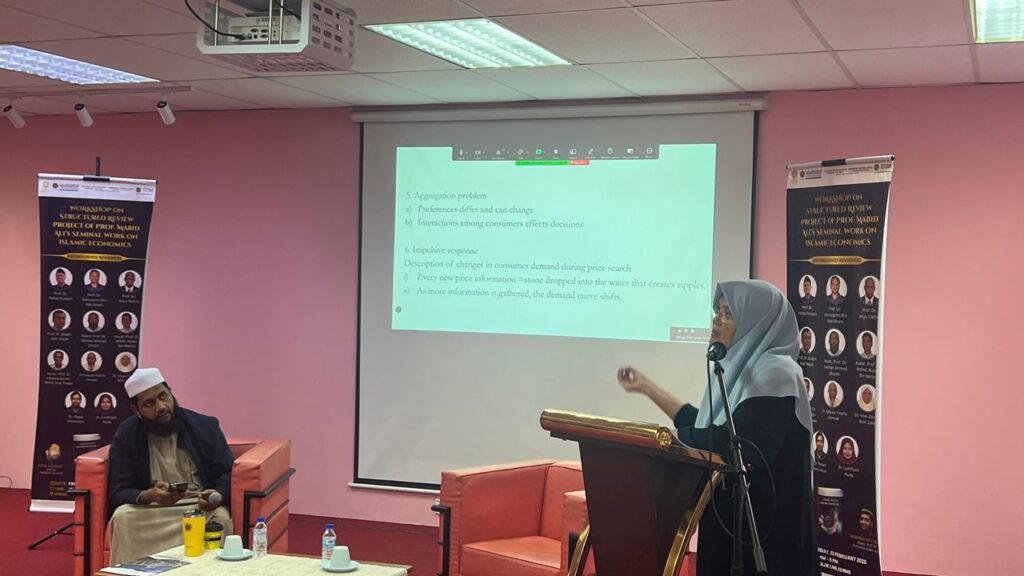
This chapter shifts from neoclassical assumptions of perfect rationality to a more realistic model of consumer behavior based on bounded rationality, information search, and social influences. While it introduces useful ideas such as local markets and time-dependent demand, it lacks technical rigor, empirical support, and consistent integration of Islamic principles. The reviewer suggests improving clarity, structure, and analytical depth.
Chapter X: Consumer Behavior
This chapter shifts from neoclassical assumptions of perfect rationality to a more realistic model of consumer behavior based on bounded rationality, information search, and social influences. While it introduces useful ideas such as local markets and time-dependent demand, it lacks technical rigor, empirical support, and consistent integration of Islamic principles. The reviewer suggests improving clarity, structure, and analytical depth.
Chapter XI: Sraffa’s Theory of the Firm
This chapter critiques the neoclassical theory of the firm, particularly the unrealistic U-shaped cost curve and marginalist decision-making. It emphasizes that real firms operate under excess capacity and institutional constraints, but it does not clearly provide an alternative framework. The reviewer recommends developing a more explicit theory of the firm, especially within an Islamic economic context.
Chapter XII: The Firm and Floating Disequilibrium
This chapter builds on the previous one by introducing a dynamic view of markets where firms operate through search, adjustment, and satisficing rather than optimization. It presents the idea of “floating disequilibrium,” where markets may not reach stable equilibrium. The chapter highlights the importance of institutions and ethics but needs clearer integration of Islamic economic principles and institutional detail.
Chapter XIII: Markets & Trading Rules
This chapter examines market functioning through Islamic principles such as justice, transparency, and efficiency, addressing issues like riba, gharar, and market manipulation. However, it lacks a strong conceptual foundation and does not sufficiently address modern market structures or regulatory frameworks. The reviewer suggests incorporating maqasid al-shariah, improving structure, and using real-world examples
Chapter XIV: Transactions in Islamic & Conventional Systems
This chapter compares Islamic and conventional financial transactions, arguing that Islamic systems are more efficient due to lower transaction costs. It introduces a typology of real, semi-real, and nominal transactions, but relies heavily on assumptions and lacks empirical validation. The reviewer recommends clearer conceptual development, stronger evidence, and better integration of Islamic legal principles.
Chapter XV: What is Wrong with Interest Rate Theories
This chapter challenges the idea of a single equilibrium interest rate by highlighting the aggregation problem and heterogeneity of preferences. It argues that interest rates are institutionally determined rather than naturally emerging from markets. While technically strong and original, it lacks clear integration of Islamic perspectives and needs better structure for teaching purposes.
Chapter XVI: The Rate of Interest & Inefficiencies
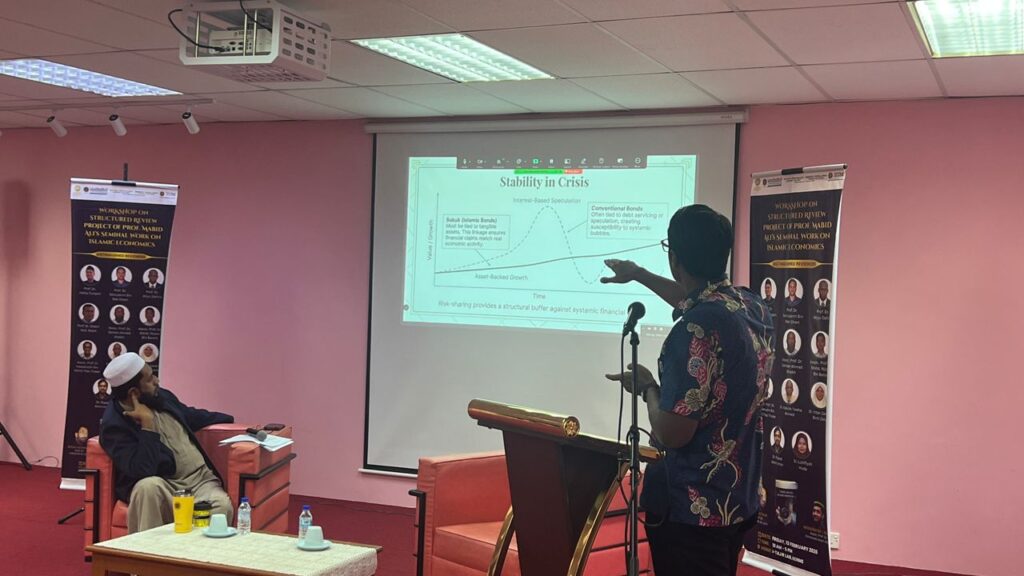
This chapter argues that interest-based systems create inefficiencies in resource allocation and contribute to economic instability. It proposes replacing loan-based finance with Islamic contracts such as profit-sharing and asset-based arrangements. Although insightful, it lacks practical guidance on implementation and institutional transition.
hapter XVII: Islamic Finance Contracts & Institutions
This chapter reviews Islamic financial instruments and institutions, emphasizing profit-and-loss sharing and institutional roles in reducing information asymmetry. However, it relies on weak evidence in some areas and requires stronger integration of Sharia principles and primary sources. The reviewer suggests improving methodological clarity and supporting arguments with stronger evidence.
Chapter XVIII: Hedging in Islamic Finance
This chapter explores risk management within Islamic finance, allowing hedging if it avoids prohibited elements like speculation. It proposes Sharia-compliant alternatives but provides overly broad permissibility criteria and lacks practical clarity. The reviewer recommends more precise guidelines and stronger methodological grounding.
Chapter XIX: The Economics of Islamic Finance
This chapter defends Islamic finance using mainstream economic concepts such as efficiency and stability, arguing for a zero-interest system and risk-sharing mechanisms. It proposes a macroeconomic model involving 100% reserves and central bank-led financing, but faces challenges regarding realism, inflation, and implementation. The reviewer suggests improving clarity, addressing policy trade-offs, and linking theory to real-world practice.





Download Summary Report For Book Review